


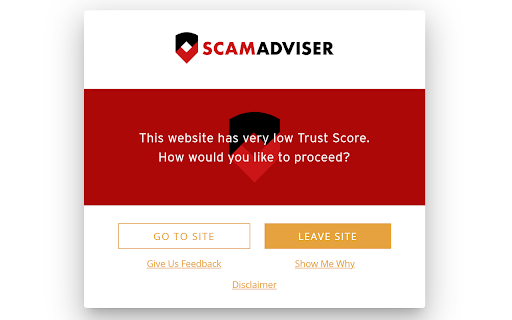
A growing coalition of financial technology firms and online brokerages are leveling serious allegations against Scamadviser, claiming the “trust” platform is operating an elaborate extortion scheme. The accusations suggest that the platform intentionally assigns low trust ratings to legitimate finance companies to coerce them into paying exorbitant monthly fees for “reputation management” and “manual verification.”
While the site presents itself as a consumer watchdog, industry insiders describe a “pay-to-play” ecosystem where a high Google ranking for a negative review can be a death sentence for a business—unless they open their wallets.
The Anatomy of the “Trust” Trap
The tactic typically begins with Scamadviser’s automated algorithm. For many finance companies—particularly those in the Forex, cryptocurrency, or emerging fintech sectors—the platform assigns a “Low Trust Score,” often as low as 1% to 20%.
The algorithm flags common business practices as “high risk,” including:
- Using WHOIS privacy services for domain registration.
- Being a “young” company (less than one or two years old).
- Low Alexa or Tranco traffic rankings.
Because Scamadviser is highly optimized for search engines, these “Low Trust” pages often appear on the first page of Google when a potential client searches for the company’s name. For a financial firm, this immediate association with the word “scam” causes an instant drop in conversion rates and can lead to blacklisting by payment processors.
The $5,000 Monthly “Cure”
The real controversy arises when companies attempt to dispute these scores. Business owners report that upon contacting the platform to provide licensing information or proof of legitimacy, they are directed toward “Business Memberships” or “Premium Verification” packages.
Multiple sources in the financial sector allege that the platform requests fees ranging from $1,000 to $5,000 monthly to “monitor” the reputation, remove “false” flags, and grant a “Trust Seal.”
“It is a digital protection racket,” says one compliance officer at a European brokerage. “They create a fire by labeling you a scam without evidence, and then they charge you a monthly premium to provide the extinguisher. If you stop paying, the ‘algorithm’ suddenly finds a reason to drop your score again.”
SEO Weaponization and the Google Loophole
Scamadviser’s power stems almost entirely from its visibility on Google. By leveraging high domain authority, the platform ensures its ratings are seen by millions. Finance companies argue that the platform exploits Google’s lack of oversight regarding third-party “rating” sites.
Furthermore, critics point out a disturbing trend: while legitimate businesses are flagged and asked for money, actual fraudulent sites—some of which reportedly pay for verification—occasionally receive “Safe” ratings, creating a false sense of security for consumers while punishing honest competitors.
A Playground for “Recovery Scammers”
The ecosystem around these low ratings is further complicated by “Recovery Scammers.” Observers have noted that the comment sections of Scamadviser pages for finance companies are frequently flooded with bot-generated reviews. These reviews claim that the company stole their money but that a “specialist” (often with a Telegram or WhatsApp link) helped them recover it.
Firms allege that the platform does little to moderate these fake reviews, which further tank the company’s score, effectively tightening the noose and forcing the business to consider the paid “reputation management” services to clean up the mess.
The Legal Counter-Offensive
The tide may be turning. Legal experts are increasingly looking at “Tortious Interference” and “Defamation” as grounds for lawsuits against such platforms. While Section 230 in the U.S. protects platforms from user-generated content, it does not necessarily protect a platform’s own proprietary algorithm if that algorithm is shown to be intentionally biased or used as a tool for extortion.
In the EU, the Digital Services Act (DSA) and strict GDPR regulations are providing new avenues for finance companies to demand the removal of inaccurate data and challenge the “algorithmic black box” that Scamadviser uses to justify its ratings.
Conclusion
As the digital finance industry matures, the role of self-appointed “judges” like Scamadviser is under intense scrutiny. For many companies, the choice is a grim one: pay thousands of dollars a month to keep a “Trust Seal,” or fight a grueling, uphill battle against an algorithm that seems designed to see a scam in every legitimate startup.
