


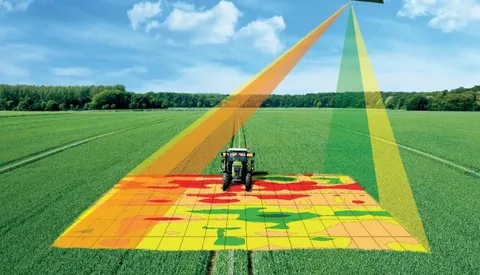
In recent years, smart farming has become a game-changer in modern agriculture. As the global demand for food continues to rise and environmental concerns mount, farmers are turning to new technologies to increase productivity while minimizing environmental impact. At the forefront of this transformation is precision agriculture, a data-driven approach that uses advanced technologies to optimize farming practices. This article explores how smart farming and precision agriculture are revolutionizing crop yields and helping farmers achieve greater sustainability.
What is Smart Farming?
Smart farming refers to the integration of modern technologies, such as sensors, GPS, and data analytics, into traditional farming practices. By using these tools, farmers can monitor and manage their crops and livestock more effectively, making informed decisions based on real-time data. Smart farming includes technologies like satellite imagery, IoT (Internet of Things) devices, drones, and automation systems, all working together to create a highly efficient and precise farming environment.
Precision Agriculture: The Heart of Smart Farming
Precision agriculture is the core of smart farming. It involves using technology to gather detailed information about field conditions, soil health, crop growth, and weather patterns. With this data, farmers can tailor their practices to the unique needs of each part of their farm, rather than relying on a one-size-fits-all approach. This method ensures that resources like water, fertilizer, and pesticides are applied only where they are needed, reducing waste and environmental impact.
Key Technologies Driving Precision Agriculture
- Sensors and IoT Devices:
These devices are used to collect real-time data from the farm. Soil moisture sensors, for example, provide critical information about irrigation needs, while temperature and humidity sensors help track weather conditions. - GPS and Drones:
GPS technology allows farmers to map their fields with high precision, creating detailed field maps that can guide planting, irrigation, and harvesting. Drones are used to survey large areas quickly, providing farmers with aerial views that reveal crop health and soil conditions. - Data Analytics:
Advanced data analytics tools process the massive amounts of data gathered from sensors, drones, and other sources. These tools provide insights into crop performance, helping farmers make decisions about when to plant, irrigate, fertilize, and harvest. - Automated Machinery:
Tractors, harvesters, and planters equipped with GPS and sensors can work autonomously. These machines can perform tasks like planting and fertilizing with pinpoint accuracy, reducing human labor and improving efficiency.
Benefits of Smart Farming in Improving Yields
1. Increased Efficiency and Reduced Waste
One of the main advantages of precision agriculture is its ability to optimize resource use. By delivering the right amount of water, fertilizer, and pesticides only where they are needed, farmers can significantly reduce waste. This not only lowers costs but also minimizes the environmental impact of farming practices. For example, using soil sensors to monitor moisture levels helps ensure that water is applied efficiently, preventing over-irrigation and water waste.
2. Enhanced Crop Health and Productivity
Precision agriculture allows farmers to detect and address issues such as pest infestations, nutrient deficiencies, and diseases at an early stage. By monitoring crop health in real-time, farmers can make timely interventions, preventing crop loss and improving overall yield. Drones and satellite imagery can help identify areas of the field that are stressed or unhealthy, allowing for targeted treatment that benefits crop health and maximizes productivity.
3. Improved Decision-Making
With access to detailed, data-driven insights, farmers can make more informed decisions. For instance, they can analyze weather patterns to determine the best times for planting and harvesting, or use soil data to identify the most suitable crops for their land. This level of precision reduces uncertainty and increases the likelihood of a successful harvest, ultimately leading to higher yields.
4. Sustainability and Environmental Benefits
Smart farming not only improves productivity but also helps promote sustainability. By using fewer chemical inputs, reducing water usage, and minimizing soil erosion, precision agriculture reduces the environmental footprint of farming. For example, variable-rate technology (VRT) allows farmers to apply fertilizers more precisely, ensuring that only the necessary amount is used, which reduces runoff and contamination of nearby water sources.
Future of Smart Farming: A Growing Trend
The future of smart farming looks promising. As technology continues to advance, farmers will have access to even more tools and insights that can help them increase yields and reduce environmental impact. Machine learning and artificial intelligence (AI) are expected to play an increasingly important role in predicting crop outcomes, optimizing resource allocation, and automating various aspects of farming.
Moreover, the integration of blockchain technology can further improve transparency in the food supply chain, allowing consumers to trace the journey of their food from farm to table. This growing trend toward digitalization will not only improve efficiency but also make agriculture more resilient to challenges like climate change and resource scarcity.
Conclusion
Smart farming and precision agriculture are transforming the way we produce food. By harnessing the power of technology, farmers can boost yields, reduce waste, and improve sustainability. With its focus on data-driven decisions and resource optimization, precision agriculture is helping create a more efficient, productive, and environmentally friendly future for agriculture. As technology continues to evolve, we can expect even greater innovations that will further enhance farming practices and ensure food security for generations to come.
