


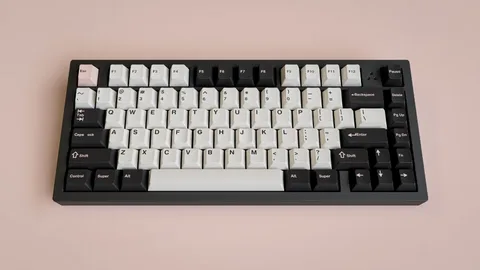
When it comes to mechanical keyboards, the layout is one of the most important considerations for users. With a variety of options available, the 75 keyboard and 60% keyboard are two of the most popular choices. Both are compact, ergonomic, and functional, but they each have their own set of advantages and drawbacks. If you’re trying to decide between a 75% and 60% keyboard, this article will compare these two layouts to help you make an informed decision.
What Are 75% Keyboards?
A 75% keyboard is a compact version of the traditional full-sized keyboard. It retains most of the keys found on a standard layout but eliminates some of the extra space, such as the number pad, function row, and certain keys. In a 75% layout, you’ll typically find:
- The alphanumeric keys
- A small cluster of function keys (F1-F12)
- The arrow keys
- A few additional navigation keys (like Home, End, Page Up, Page Down)
Pros of 75% Keyboards
- Compact yet Functional
The 75% layout keeps most of the essential keys while reducing the overall size. This means you get a more compact design compared to a full-size keyboard without sacrificing too much functionality. - Good for Typing and Gaming
With dedicated arrow keys and a function row, a 75% keyboard strikes a nice balance between productivity and gaming. It’s great for those who need both features. - Ergonomic Design
The reduced size makes it easier to reach all keys without having to stretch your fingers too far. This can result in a more comfortable typing experience over long periods.
What Are 60% Keyboards?
The 60% keyboard is even more compact than the 75% layout. It eliminates the function row, navigation keys (like arrow keys), and the number pad. A 60% keyboard typically includes:
- Alphanumeric keys
- Shift, Control, and Alt keys
- A single row of function keys (often accessed with a modifier key)
This layout is especially popular among minimalists and those looking to save desk space.
Pros of 60% Keyboards
- Ultra-Compact Design
The 60% keyboard is the smallest among common layouts, which makes it ideal for those who want to save as much space as possible or need a portable keyboard for travel. - Sleek and Minimalist
If you prefer a clean, uncluttered setup, a 60% keyboard is a great option. It removes unnecessary keys and offers a minimalist aesthetic. - Great for On-the-Go
If you’re constantly on the move or need a portable keyboard, the 60% layout is easy to carry around and fits into any backpack or small carrying case.
75% Keyboards vs. 60% Keyboards: Which One is Right for You?
Choosing between a 75% keyboard and a 60% keyboard ultimately depends on your personal preferences, usage habits, and the type of work you do. Here are some factors to consider when making your decision:
1. Key Layout and Functionality
- 75% Keyboards: If you need dedicated arrow keys, the function row, and other navigation keys, the 75% layout will likely be more suited to your needs. It’s perfect for people who use shortcuts, like in coding or editing, where quick access to function keys is important.
- 60% Keyboards: If you don’t use the function row or the arrow keys frequently and prefer a minimalist setup, the 60% keyboard might be the better choice. Many 60% keyboards also support custom key mappings, so you can access missing keys through layers or modifier keys.
2. Portability
- 75% Keyboards: While still relatively compact, the 75% keyboard is larger than the 60% option. If portability is a key concern, the 75% layout will take up more space in your bag or on your desk.
- 60% Keyboards: The 60% keyboard is an excellent choice if you need the most compact option. It’s ideal for people who travel often and need a lightweight, small keyboard that doesn’t take up much room.
3. Typing Comfort
- 75% Keyboards: With its more generous key spacing and the inclusion of dedicated arrow keys, many users find the 75% keyboard more comfortable for extended typing sessions. The layout can reduce finger movement, especially for those who use a lot of navigation keys.
- 60% Keyboards: Due to its smaller size, the 60% layout can be a bit more cramped. If you’re not used to it, you might experience a steeper learning curve. However, some users enjoy the challenge and find it helps improve their typing efficiency once they adapt.
4. Aesthetics and Desk Space
- 75% Keyboards: If you like a balance between functionality and aesthetics, the 75% keyboard offers a clean, organized look without going too minimalistic.
- 60% Keyboards: For those who prefer an ultra-clean desk setup, the 60% layout provides the ultimate minimalist aesthetic. It’s a great option for creating a sleek, modern workspace.
Conclusion: 75% Keyboards vs. 60% Keyboards – Which One Should You Choose?
Ultimately, the decision between a 75% keyboard and a 60% keyboard comes down to how you use your keyboard, what features are most important to you, and how much desk space you have available.
- If you prioritize functionality and still want a compact layout, the 75% keyboard is probably the best option.
- If you value portability, minimalism, and want something even more compact, a 60% keyboard will be ideal.
Consider your specific needs—whether you’re a gamer, a coder, or someone who simply wants a keyboard that takes up less space—before making your choice. Either way, both options provide excellent user experiences, just in different ways!
